symtom
Gel polish allergy? Why I moved to press-on nails
My skin gave up on gel polish before I understood why. The cuticles on both thumbs went red and itchy about a day after each fill. It took a few rounds to connect the rash to the polish, because the reaction runs late. The culprit turned out to be a substance called HEMA, and that is when I moved to press-on.
Here is what HEMA is, why gel can start arguing with your skin, and how press-on sidesteps the whole thing.
What HEMA actually is
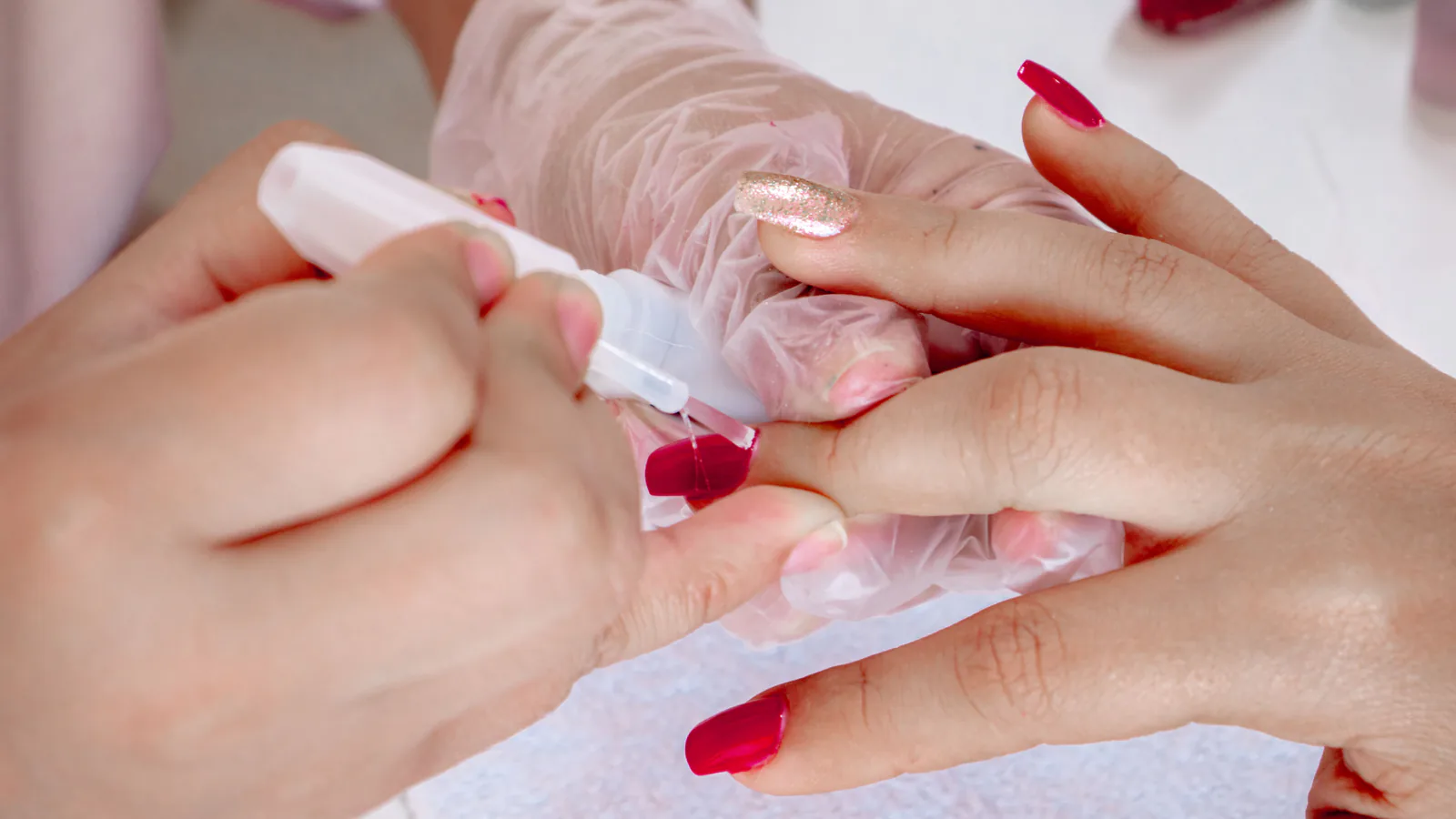
HEMA stands for hydroxyethyl methacrylate. It is a small acrylate molecule in most gel polishes, and it gives the gel its grip on the nail. Cured hard under a lamp, it locks into the layer and does nothing to the skin.
The trouble sits in the liquid stage. Before it sets, the molecule is small enough to seep into any skin it touches, and the body can learn to dislike it. A drop on the cuticle does it. So can filing dust, or a lamp too weak to cure the layer through. Home kits get more of this, because the lamps are often weaker and the hand is less steady.
Why the reaction shows up late
A gel reaction is a delayed one. Mine appeared half a day to two days after each appointment, never on the spot. That lag is the reason so many people miss the link. By the time the skin flares, the manicure already feels like old news.
Most people who react at all get itching and dry, cracked skin around the nails and fingertips. Some notice it on the eyelids too, since fingers reach the face all day and carry the substance along. It builds slowly, over months or years of gel, not on the first try. That is why you can wear gel happily for ages, then start reacting out of nowhere.
Why press-on skips the trigger
Press-on nails are already cured plastic when they reach you. No liquid monomer sets against your skin, so the acrylate never gets its chance to seep in. The bond comes from nail glue or an adhesive tab on the nail plate, not from a reactive gel.
I have worn press-on for months now, and the thumb rash has not come back. Nail glue is not nothing, to be fair. Cyanoacrylate can sting broken skin, and a few people find it a touch drying. But it is different chemistry from gel acrylates, and it sits on the nail rather than curing wet against the cuticle. For anyone who reacted to gel, that is the practical appeal: long nails without the stage that caused the problem.
Applying so the skin stays calm
My rule is to keep everything off the skin. I size each nail dry first, so I am not fiddling once the glue is on. A thin line of glue down the middle of the press-on, not the edges, stops it squeezing onto the cuticle.
Press and hold each nail for thirty seconds. That is longer than it feels, and it is the gap between five days and two. If glue does escape onto the skin, I wipe it before it sets rather than picking at it later.
Taking them off gently
Removal is where nails get wrecked, gel or press-on. I never pry a press-on off. Warm water with a little soap for ten minutes loosens the glue, then the nail lifts with gentle pressure from a cuticle stick.
Should one still grip, I soak longer rather than force it. Between sets I give the nails a bare day and a bit of oil on the cuticle. That short rest keeps the plate from feeling thin, and it means the next set has clean nail to hold onto.
If you still want to try gel
Maybe you are not ready to drop gel entirely. HEMA-free products exist, though HEMA-free is not acrylate-free, and related molecules like di-HEMA can bother the same skin. A careful application with full curing and no skin contact lowers the odds without erasing them. For me it was simpler to skip the liquid stage and wear press-on, but the call is yours.
Common questions
Will press-on trigger the same reaction?
Not the acrylate one, in my experience. Press-on are cured plastic, so there is no wet monomer meeting your skin. The glue is a separate question, and a few people find cyanoacrylate drying, but it is not the gel chemistry that caused the rash.
Is HEMA-free gel a safe swap?
It lowers the risk without removing it. HEMA-free still leans on acrylates, and di-HEMA or similar molecules can annoy the same skin. If gel gave you real trouble, press-on steps around the reactive stage completely.
Do acrylic nails work instead?
Acrylic runs on acrylate chemistry too, a close cousin of gel. If liquid monomer on the skin was your issue, acrylic is unlikely to solve it. Ready-made press-on avoid that whole step.
How long do press-on last compared with gel?
A well-applied set holds me about five days on the busy hand, longer on the fingers I baby. Gel used to give me two to three weeks, so press-on ask for more frequent swaps. The trade is nails I can put on and take off without a lamp or a flare-up.
Related reading
Coming off gel? We wrote about how nails recover after gel polish and how press-on compares with gel. For the practical side, there is our guide to removing nail glue gently and to caring for nails between sets.
I did not plan to become a press-on person. The rash made the decision, and the sets turned out to hold better than I expected. If gel has started arguing with your skin, this is the quiet way around it.
Get the hold guide free
Enter your email and we'll send our guide: prep, glue amount and the tricks that get press-ons to hold a week. A calm email now and then, unsubscribe whenever you like.
We never share your email. Unsubscribe with one click.